.jpg?width=1336&height=785&name=iStock-1297311790%20(1).jpg)
In an era dominated by artificial intelligence, automated workflows, and rapid technical literacy, you might assume data and code are the ultimate workplace currencies.



.jpg)
In an era dominated by artificial intelligence, automated workflows, and rapid technical literacy, you might assume data and code are the ultimate workplace currencies.

I don't know about you, but in my household, we were all abuzz with the World Cup in July. My husband regularly tuned in to the games, and he volunteered for those hosted here in the Bay Area at Levi's Stadium.

Building trust within an organization is a delicate, continuous process. It is a living dynamic built or eroded in the micro-moments of our daily interactions. This is especially true today, as we navigate an era of intense ambiguity and change, where teams are asked to pivot, experiment, and co-create in uncharted territory.

I heard a quote recently that has really stuck with me.
“A closed mouth is a closed destiny.”

The precision and technical depth that make you a great engineer or scientist can often become obstacles in leadership. As Dr. Gwen Acton (author of Leadership for Scientists and Engineers) explained during a recent PowerSpeaking Live!, moving into a leadership position turns your voice into a megaphone. Your words, once just data points among peers, are now amplified and scrutinized. And their impact often has much more to do with human behavior than data. In this new role, your presence and communication carry a gravity you might not have expected.


The old-school career advice was simple: "Work hard, and you’ll eventually get noticed." But in today’s landscape, where project-based work is replacing hierarchy and AI is shifting role expectations, that "head-down" mindset can actually limit your professional growth.


Many presenters—especially technical experts—approach the C-Suite focused on their data and slide deck, but the reality is that the most challenging aspect of executive presentations isn't the content; it’s being savvy about managing a dynamic, and sometimes challenging, dialogue.
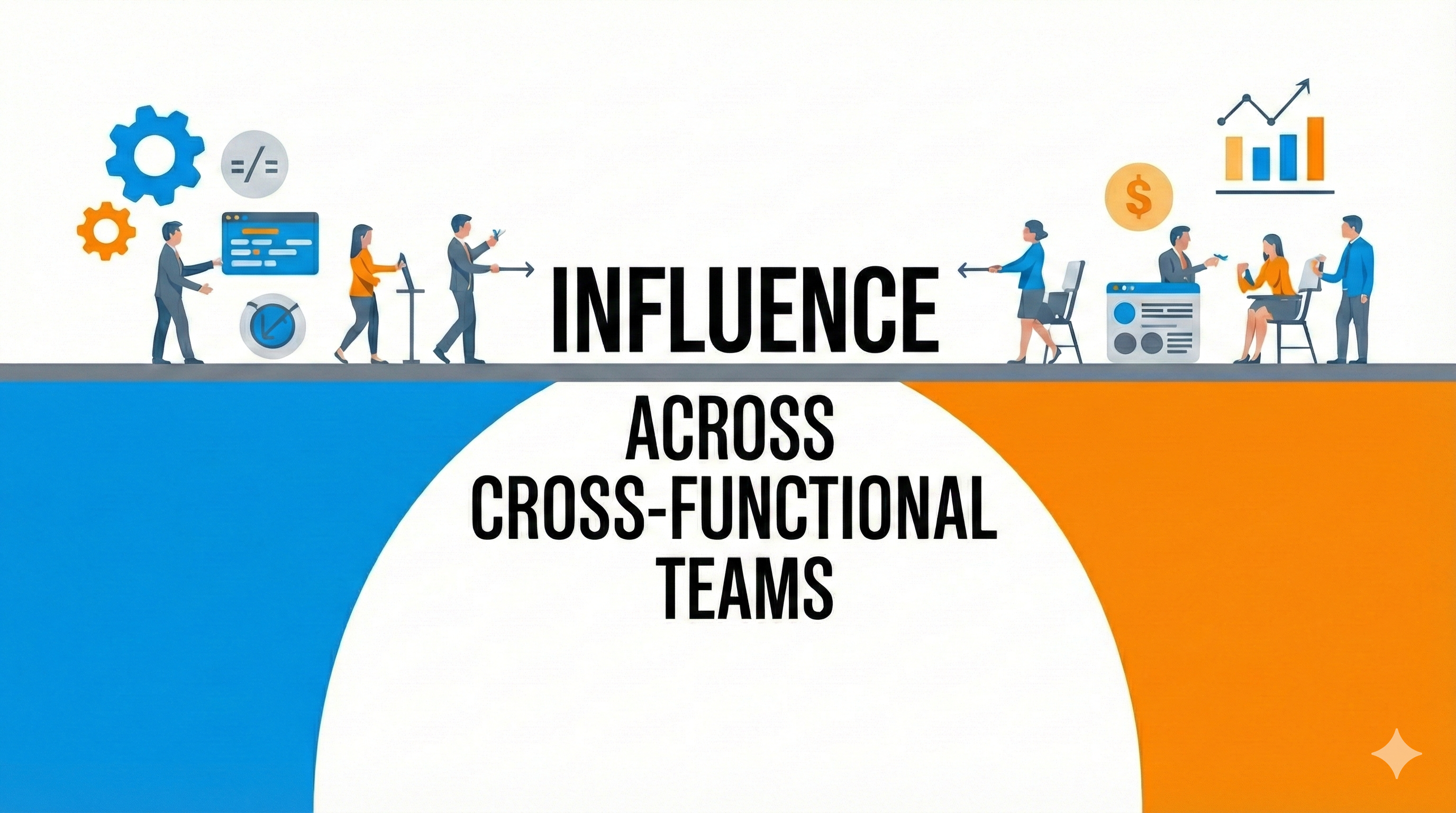
Effective training helps technical experts influence cross-functional teams by teaching them to translate complex data into business impact. They learn to adapt their message, understand diverse team priorities, and facilitate decision-making, which is precisely why we developed Speaking Up: Presenting to Decision Makers®.
.png)
.png?width=818&height=545&name=MockFrameworkv2%20(1).png)
Imagine trying to build a complex bridge without a blueprint or composing a symphony without capturing it on sheet music. It sounds absurd, yet every day in business, we attempt to communicate—in presentations, meetings, and even impromptu discussions—without a clear structure to make sure we’re being clear, concise, and compelling.
%2c%20PowerSpeaking%2c%20Inc.%20Facilitator%20and%20Coach%2c%20knows%20a%20thing%20or%20two%20about%20the%20power%20of%20improv.%20Here%20she%20is%20on%20stage%20at%20the%20Edinburgh%20Improv%20festival%20earlier%20this%20year.y%20(5)-1.png)
%2c%20PowerSpeaking%2c%20Inc.%20Facilitator%20and%20Coach%2c%20knows%20a%20thing%20or%20two%20about%20the%20power%20of%20improv.%20Here%20she%20is%20on%20stage%20at%20the%20Edinburgh%20Improv%20festival%20earlier%20this%20year.y%20(5).png?width=818&height=460&name=Bod%20Jess%20Rogers%20(center)%2c%20PowerSpeaking%2c%20Inc.%20Facilitator%20and%20Coach%2c%20knows%20a%20thing%20or%20two%20about%20the%20power%20of%20improv.%20Here%20she%20is%20on%20stage%20at%20the%20Edinburgh%20Improv%20festival%20earlier%20this%20year.y%20(5).png)
Let’s say you're in a meeting, and your boss suddenly asks for your input on a project that you're not prepared to discuss. Or you're in the middle of a high-stakes presentation, and suddenly your slides freeze. In those moments, you don't have time to script a perfect reply. You have to improvise.
Subscribe to PowerSpeaking Insights to get our blog, best-practice tips, special offers, and more sent directly to your inbox.

.png?width=270&height=360&name=PS%20Live%20Blog%20Sidebar%20CTA%20(31).png)

Phone:
650-631-8459 or
800-828-1909
Address:
303 Twin Dolphin Dr, Suite 600
Redwood City, CA 94062
Get our blog, best-practice tips, special offers, and more sent directly to your inbox.